Chalcones are flavonoids of the chalcone type. They retain the same chemical structure in their skeleton and belong to the group of aromatic ketones, a plant chemical compound that has a carbonyl functional group attached to two carbon atoms. It is also an enone with a C=C double bond.
Contents
Properties of Chalcones
Known as chalconoid or chalcone, chalcones are chemical compounds produced in plants, also known by their scientific name of benzylidenacetophenones, styryl-phenyl-ketones, or phenyl styryl ketones.
They have significant biological activity in plants and in humans when ingested.
These types of plant secondary metabolites are precursors to the synthesis of flavones 3, another of the types of flavonoids very important for their therapeutic properties.
Depending on their chemical structure and the type of aromatic rings they are composed of, the benefits for the human body can vary, with the properties of chalcones being as follows:
- Antimalarial.
- Antileishmaniasis.
- Antituberculosis.
- Antifungal.
- Antibacterial.
- Antiviral.
- Antitumor.
- Antipsychotic.
- Antioxidant.
- Analgesic.
- Cardiotonic.
- Blood circulation activators.
- Capillary and blood vessel strengtheners.
- For cholesterol control or hypocholesterolemic.
Benefits
Chalcone flavonoids have significant therapeutic importance as they can affect the body in two ways. The first as a single unit and the second independently, allowing for conjugated addition.
Their mechanism of action is similar to 1,3-dicarbonyl compounds.
The way Chalcones function makes them ideal compounds for the formation of heterocyclic systems of 5, 6, and 7 members (pyrimidines, pyrazolines, isoxazoles, diazepines, etc.).
The use of Chalcones has antibacterial, antifungal, and antiviral effects, and can also be applied in cases of malaria or malaria.
Similar to other flavonoids, chalcone has antioxidant properties, a quality that protects the body against free radicals and prevents cardiovascular system deterioration. These benefits can be compared with other types of flavonoids such as anthocyanins, which are also polyphenolic compounds of plant origin that act in the human body as protectors against oxidative stress, block damage from free radicals while having anti-inflammatory effects and memory stimulants.
Synthesis
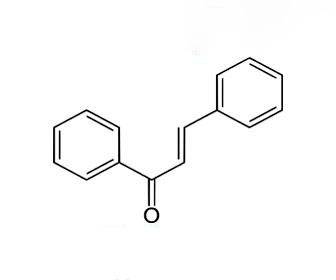
Modern industry has found various ways to synthesize Chalcones, but the most common due to its simplicity and practicality is through Claisen-Schmidt condensation. For this, benzaldehyde derivatives and acetophenone derivatives are used in an acidic or basic medium according to Kostanecki and Tambor, 1899.
The described method for synthesizing them allows for the inclusion of different aromatic rings in Chalcones, producing multifaceted variants that will target therapeutic goals with different purposes.
Uses
- As a substitute antibacterial agent for antibiotics.
- As precursors in the synthesis of pyrazoline compounds.
- Manufacture of agricultural products.
- Manufacture of medicines.
Currently, research is underway on the possible applications of Chalcones to replace the use of antibiotics since it has been demonstrated that many bacteria have become resistant to the action of these. The search for new formulas with natural elements is essential to reduce the frequency with which antibiotics are taken.
The development of chalcones is a broad field, with many applications and medicinal benefits. It is important to synthesize drugs from plant raw materials and, of course, that these have specific biological activity.
Importance of Lactobacilli and Chalcones
To test the effectiveness of substances derived from chalcones, various in vitro studies have been conducted with Gram-negative bacteria. These studies have allowed and continue to enable the exploration of their effects and the most effective ways to synthesize them to produce drugs and products beneficial for both plants and humans.
Specifically, bacteria such as Bacillus pumilis and Bacillus subtilis have been used, along with other species such as Proteus vulgaris and Escherichia coli.
While studying the reaction of chalcone in Gram-negative bacteria, its effects on Gram-positive bacteria like Staphylococcus aureus are also being investigated. Modifications are made to obtain various strains, allowing the study of their medicinal properties and subsequent synthesis of compounds with functionality and properties similar to penicillin, tetracycline, and ampicillin.
The use of chalcones is of great importance. The search for better antibacterial and antifungal solutions is a recurring theme, becoming more crucial as traditional antibacterials cease to have the sought-after effect achieved in the past.
Names of Chalcones
- Benzylideneacetophenone.
- Chalcone.
- Trans-Chalcone.
- (E)-Chalcone.
References
- Merck Index, 11th Edition, 2028.
- Toda, F., et al., J. Chem. Soc. Perkin Trans. I, 1990, 3207.
- Palleros, D. R., J. Chem. Educ., 81, 1345 (2004).
- Comisar, C. M. and Savage, P. E. Green Chem., 6 (2004), 227 – 231.
- Photochemistry of chalcone and the application of chalcone-derivatives in photo-alignment layer of liquid crystal display. Dong-mee Song, Kyoung-hoon Jung, Ji-hye Moon and Dong-myung Shin, Optical Materials, 2002, volume 21, pages 667–671, doi 10.1016/S0925-3467(02)00220-3
- P Venkatesan and S Sumathi, «Piperidine Mediated Synthesis of N-Heterocyclic Chalcones and Their Antibacterial Activity», J. Heterocyclic Chem., 47, 81 (2010).
- Ramírez M. E., Revista Mexicana de ciencias (2012), Síntesis y actividad biológica de chalconas, Departamento de Química Orgánica, Facultad de Ciencias Químicas, Universidad Autónoma de Coahuila.
- Leusink, A.J.; Noltes, J.G. (1966). «Reaction of organotin hydrides with α,β-unsaturated ketones». Tetrahedron Letters 7 (20): 2221.
- Parvesh, Amit y Vipan, 2014.
- Moritani, Yasunori; Appella, Daniel H.; Jurkauskas, Valdas; Buchwald, Stephen L. (2000). «Synthesis of β-Alkyl Cyclopentanones in High Enantiomeric Excess via Copper-Catalyzed Asymmetric Conjugate Reduction». Journal of the American Chemical Society 122 (28): 6797.
- Stanley A L, Ramani V A. Isolation and Identification of a Chalcone From Baccopa monnieri. Asian J Chem. 2010; 22 (2): 965-970. Maheswara M, Rao Y K, Siddaiah V, Rao C V. Isolation of new Chalcone from the leaves of Bauhinia variegata. Asian J Chem. 2006; 18(1):419-422.


