Chrysin is a bioflavonoid known as (5,7-dihydroxyflavone) that influences the conversion of testosterone into estrogen.
It is considered an «anabolic flavone,» a group of flavones with effects to increase the biosynthesis of other larger molecules.
Contents
What is Chrysin used for?
Chrysin’s applications are wide-ranging since, as a flavonoid, it has antioxidant effects, slows down aging in the body, and protects against molecular oxidation.
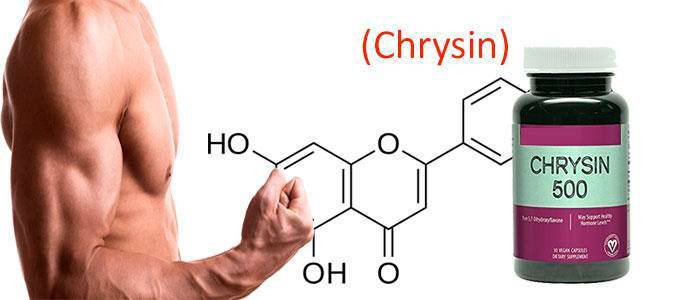
It also participates in other metabolic processes, with significant changes before and after taking it. In general, we can say that Chrysin is used for:
- Increasing the transformation of testosterone into estrogens (E-S).
- Slowing down skin aging.
- Relaxing and aiding in sleep induction.
- Alleviating menopausal discomfort.
Its primary function in the human body is to act as a phytoestrogen. When it appears, there is a decrease in the chemical reaction that converts testosterone (male sex hormone) into estrogens (female hormones).
By blocking the conversion of testosterone, it enhances muscle potency and stimulates muscle fiber creation. Chrysin is a very potent flavonoid with activity to inhibit the aromatization process that converts testosterone into estrogens in men.
This is possible thanks to the blocking of the aromatase enzyme, which leads to the conversion of androstenedione into estrone, and to complement its function in the body, it also activates the conversion of testosterone into estradiol.
Regarding the antioxidant properties of Chrysin, it has been demonstrated that it has the ability to block free radical damage, slowing oxidation and protecting against solar radiation. This effect is produced by inhibiting xanthine oxidase, a molybdenum-containing enzyme present in oxygen-utilizing organisms such as humans.
Chrysin in Foods and Medicinal Plants
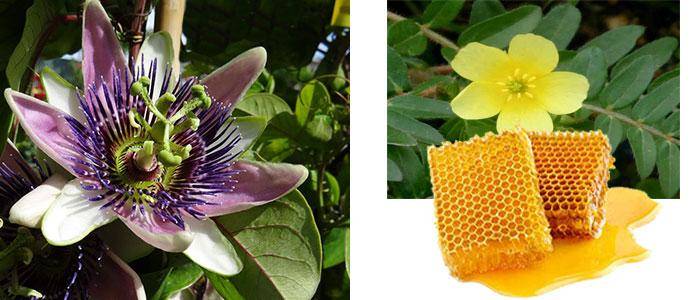
- Cherries.
- Eurycoma longifolia.
- Honey.
- Passiflora caerulea.
- Passion fruit.
- Tribulus terrestris.
- Grapes.
- Carrots.
The use of Tribulus terrestris Chrysin is very common in the production of supplements for athletes. Tribulus is a well-known medicinal plant for its properties in stimulating blood circulation and the cardiovascular system. Also, for its effects in regulating male libido.
Chrysin and Tribulus Terrestris
It is common to find bodybuilding supplements with ingredients mixed with Chrysin 500 mg and Tribulus terrestris because, for weightlifting or exercises where muscle mass is important, it can provide an extra boost.
By inhibiting xanthines, there is less formation of uric acid and lipid peroxidation. Something entirely beneficial for athletes and even functional for people with gout or joint problems.
Tribulus terrestris is used to inhibit the transformation of testosterone into estrogens, improving athletes’ capabilities and as an alternative to halt the feminization of female characteristics in men, such as gynecomastia.
Similar Molecules
- DIM (diindolylmethane)
Diindolylmethane (DIM) is a compound derived from indole-3-carbinol found in broccoli and Brussels sprouts. It is also included in kale and vegetables from the same Brassica oleracea family. It acts, like Chrysin, as an agent that inhibits the formation and use of estrogens.
Side Effects
- Irritability and anger.
- Headache.
- Nausea.
- Dizziness.
- Sensitivity in nipples and erogenous zones.
The reduction and increase in testosterone levels can cause discomfort, mood swings, and irritability. Supplements that interact with the testosterone hormone are known to cause irritability and low stress tolerance.
Studies and tests conducted on humans indicate that taking chrysin in doses of 250 mg. does not produce side effects in most adult populations. A 500 mg chrysin tablet can be divided to take it twice.
Avoid use in pregnant women and during breastfeeding.
Do not take with other treatments, especially those with medicinal properties for the liver like Cytochrome. Combining them can increase chrysin’s side effects and lead to unexpected adverse reactions. It is also not recommended with estrogen, hormonal treatments, and aromatase inhibitors.
How to Take Chrysin 100, 500, 300, and 1000 mg.

- Take 1 to 3 g of chrysin per day.
- Maximum 8 weeks of dosage.
To achieve good results with Chrysin 500 mg. or its versions, it should be taken before exercising.
The best results are obtained by taking it 1 hour before exercising and 1 hour before bedtime after training, in a 50-50 ratio.
Half of the chrysin dose should be taken before working the muscle and the other half 1 hour before going to bed.
Be consistent with the amounts you consume as these may vary depending on fitness level, as well as age, health, and assimilation capacity. The chrysin dosage (1 to 3 grams) is based on the study of supplements taken by professional athletes.
How to Improve Chrysin Absorption
This type of flavone has the peculiarity of being poorly absorbed in the small intestine. What is not assimilated is excreted and, therefore, does not produce the expected beneficial effects.
The bioavailability of chrysin is low, and other supplements and substances that stimulate its absorption can be incorporated. If you want to increase its effects, it is possible to mix it with plasmalogens and lipophosphatidylcholine.
We recommend that if you want to use substances to improve performance, always consult with a specialized sports nutritionist.
Does It Work?
The data indicates that it has good results when seeking to increase the amount of testosterone in the body. Chrysin works by inhibiting human aromatase.
Although initially the use of this flavone was indicated to complement the treatment against breast cancer, there is currently evidence that it benefits men with low testosterone production.
All studies on chrysin and testosterone have been conducted in vitro. This fact demonstrates that, although it works, there may be some variations when applied in a real human environment.
Upon contact with digestive enzymes, it undergoes significant deterioration, reducing its potency. This is why larger doses are needed than those used in controlled trials.
Commercial Names
- Chrysin.
- Chrysidenon.
- 5,7-dihydroxyflavone.


