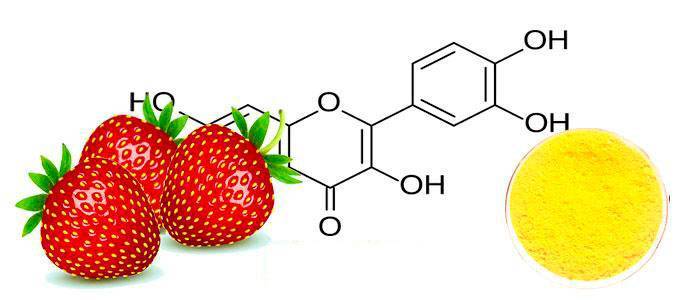
Galangin is a flavonoid of the flavonol class, the latter class being that of flavonols, composed of several polyphenolic plant compounds. It possesses properties to delay aging, also participating in protection against infections with its antibacterial effects.
Properties of Galangin
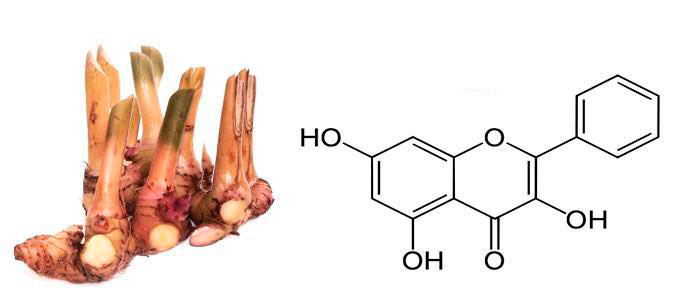
This flavonol has the ability to protect the body against the harmful effects of free radicals, loose particles that circulate in organic molecules causing tissue damage. The anti-aging properties of galangin block cellular apoptosis, maintaining cell life longer.
It has benefits for the skin, maintenance of vision, and as a cardiovascular protector.
Galangin is found in plants such as Alpinia galanga, Alpina officinarum, helichrysum aureonitens, and in preparations extracted from beehives rich in propolis.
It has also been shown to have antitumor activity. Galangin presents beneficial properties for humans as it inhibits the growth of cells of various types of breast cancer.
What is galangin used for?
- Delaying aging.
- Strengthening the body’s defenses.
- Reducing symptoms of vitiligo.
It is no coincidence that many herbal products indicated for treating the respiratory tract contain a good amount of galangin. Together with propolis, galangin improves the immune system, providing assistance in the formation and response of B lymphocytes.
For vitiligo, it is recommended to take 2 ml of galangin for 60 days. This will improve the formation of more melanin, the pigment that gives color to the skin.
References
- Ciolino, H. P.; Yeh, G. C. (1999). «The flavonoid galangin is an inhibitor of CYP1A1 activity and an agonist/antagonist of the aryl hydrocarbon receptor«. British Journal of Cancer 79 (9/10): 1340–1346.
- Hugo SX, Liu XM, Ge CH, Gao L, Peng XM, Zhao PP, et al. «The effects of galangin on a mouse model of vitiligo induced by hydroquinone«. Phytother Res 2014; 28: 1533-1538.
- «The effects of galangin on a mouse model of vitiligo induced by hydroquinone«. Phytother Res 2014; 28: 1533-1538.
- So, F.; Guthrie, N.; Chambers, A. F.; Carroll, K. K. (1997). «Inhibition of proliferation of estrogen receptor-positive MCF-7 human breast cancer cells by flavonoids in the presence and absence of excess estrogen«. Cancer Letters 112 (2): 127–133. doi:10.1016/S0304-3835(96)04557-0.
- Afolayan AJ, Meyer JJ (1997). «The antimicrobial activity of 3,5,7-trihydroxyflavone isolated from the shoots of Helichrysum aureonitens«. Journal of Ethnopharmacology 57 (3): 177-181.
- Tosi, E; Re, E; Ortega, M; Cazzoli, A (2007). «Food preservative based on propolis: Bacteriostatic activity of propolis polyphenols and flavonoids upon Escherichia coli«. Food Chemistry.
- Kaur, A.; Singh, R.; Dey, C. S.; Sharma, S. S.; Bhutani, K. K.; Singh, I. P. (2010). «Antileishmanial phenylpropanoids from Alpinia galanga (Linn.) Willd» (PDF). Indian Journal of Experimental Biology 48 (3): 314–317.
- Cushnie TPT, Lamb AJ (2005). «Detection of galangin-induced cytoplasmic membrane damage in Staphylococcus aureus by measuring potassium loss«. Journal of Ethnopharmacology 101 (1-3): 243-248.
- Afolayan AJ, Meyer JJ, Taylor MB, Erasmus D (1997). «Antiviral activity of galangin isolated from the aerial parts of Helichrysum aureonitens«. Journal of Ethnopharmacology 56 (2): 165-169.
- Cushnie TPT, Lamb AJ (2006). «Assessment of the antibacterial activity of galangin against 4-quinolone resistant strains of Staphylococcus aureus«. Phytomedicine 13 (3): 187-191.
- So, F. V.; Guthrie, N.; Chambers, A. F.; Moussa, M.; Carroll, K. K. (1996). «Inhibition of human breast cancer cell proliferation and delay of mammary tumorigenesis by flavonoids and citrus juices«. Nutrition and Cancer 26 (2): 167–181. doi:10.1080/01635589609514473.