Pelargonidin or Pelargonidin is a water-soluble plant pigment of the anthocyanin class. It has antioxidant properties for humans and serves as an element that colors the flowers of plants.
Contents
What is Pelargonidin
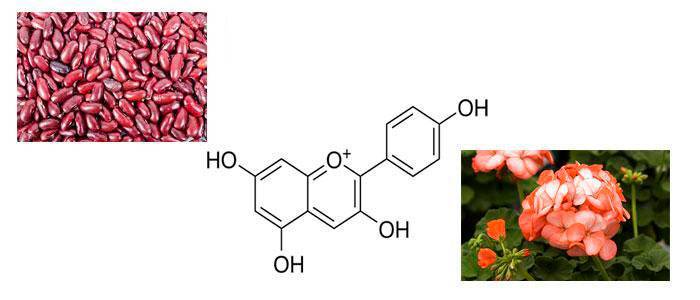
It has the property of producing orange color in plants and also pink hues. Like other anthocyanins, its properties and benefits for human health are related to its antioxidant action.
Pelargonidin is capable of blocking free radicals.
Plants and foods containing pelargonidin
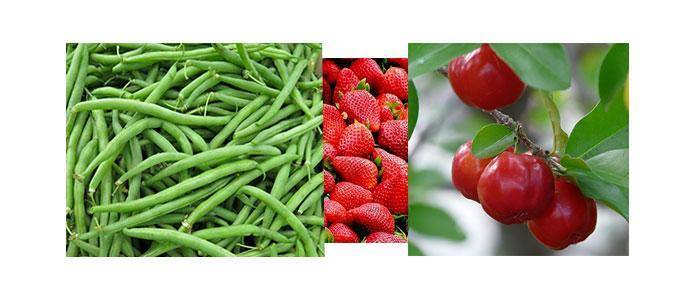
- Geraniums (Geraniaceae).
- Philodendron (Araceae).
- Pimpernel (Anagallis monelli and Myrinaceae).
- Geraniums (Pelargonium).
- Acerola (Malpighia emarginata).
- Red and black currants (Vaccinium oxycoccus).
- Berries (Aronia and Saskatum).
- Plums (Prunus).
- Raspberries (Rubus fructicosus).
- Strawberries (Fragaria).
- Beans (Phaseolus vulgaris).
- Pomegranates (Punica granatum).
- Peaches (Prunus persica).
- Blackberries (Morus and Rubus).
Plants that produce orange-colored flowers like pimpernel contain a large amount of pelargonidin. Also, those showing blue tones along with oranges. Conversely, another pigment from the anthocyanin group can produce a different coloration, such as malvidin anthocyanin and its glucosides, which produce a blue color.
Large amounts of this natural pigment have been found in geraniums, but unlike fruits, it is not edible, so its therapeutic value is limited except in cases where it is obtained from plants of the Geraniaceae genus.
To increase levels of pelargonidin anthocyanins and their glucosides, fruits are used as well as the intake of antioxidant supplements.
Forest red fruits and also black ones are the foods with the highest amount of pelargonidin. Also, other fruits like pomegranates, peaches, etc.
Pelargonidin Glucosides
- Pelargonidin-3-glucoside.
- Pelargonidin-3-O-glucoside (callistephin).
Strawberries, blackberries, and raspberries are very rich in pelargonidin-3-O-glucoside, also called Callistephin.
Glucosides with alkanoylation or chemical acylation are common in purple and red flowers, as is the case with the Ipomoea purpurea plant.
Properties and Benefits
- Antioxidant.
- Heart function protectors.
- Inhibitors of free radical action.
- Anti-aging.
Pelargonidin is a plant pigment of the anthocyanidin class, with antioxidant properties that serve to protect against oxidation and free radicals.
This characteristic is shared by other anthocyanins, acting as an antioxidant agent that delays skin aging and, when added to creams, can be used topically.
In plants, it is common for it to express orange-red coloration in flowers, and it can also promote the formation of orange-blue flowers.
It also shows a color fluctuation with the pH of the medium, being one of the anthocyanins that serve as pH indicators in solutions.
Uses as E163d Dye
Because it offers antioxidant properties and functions as a natural dye suitable for human consumption, it is also used in the food industry as a preservative agent and as a natural dye.
Pelargonidin is used as dye E163d. Its commercial form is in powder, having an orange color that improves the appearance of prefabricated foods and handmade ones such as cakes and sweets. E163-D is also commonly added to carbonated drinks, sodas, candies, and yogurts.
Pelargonidin can be obtained from different fruits for applications as a dye.
References
- Lin, Long-Ze; Harnly, James M.; Pastor-Corrales, Marcial S.; Luthria, Devanand L. (2008). «The polyphenolic profiles of common bean (Phaseolus vulgaris L.)». Food Chemistry 107: 399. doi:10.1016/j.foodchem.2007.08.038.
- Mullen, William; Edwards, Christine A.; Serafini, Mauro; Crozier, Alan (2008). «Bioavailability of Pelargonidin-3-O-glucoside and Its Metabolites in Humans Following the Ingestion of Strawberries with and without Cream». Journal of Agricultural and Food Chemistry 56 (3): 713-9. PMID 18211024. doi:10.1021/jf072000p.
- Saito, N; Tatsuzawa, F; Yokoi, M; Kasahara, K; Iida, S; Shigihara, A; Honda, T (1996). «Acylated pelargonidin glycosides in red-purple flowers of Ipomoea purpurea». Phytochemistry 43 (6): 1365-70. PMID 8987912. doi:10.1016/s0031-9422(96)00501-8.


