Apigenin is a natural flavonoid with properties to detoxify cellular waste and antioxidant benefits.
This plant pigment can be found in many foods and in supplements available in capsule form. The benefits vary depending on the brand, the chosen food, and the method of extraction. But to give you an in-depth understanding of what apigenin is, below we detail all its beneficial properties for the human body, as well as the glucosides that compose it.
Contents
What is Apigenin and What is it Used For
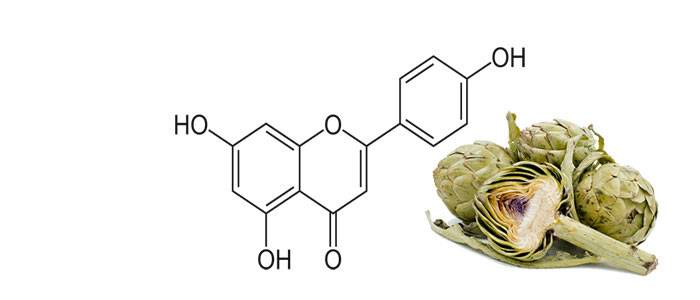
It is a plant compound present in fruits and vegetables as well as in many medicinal plants. Apigenin (4’,5,7-trihydroxyflavone) is a flavone considered a phytochemical. It corresponds to the aglycone of many natural glucosides.
This plant-derived molecule has medicinal properties to improve detoxification of the body, as well as to act preventively in various types of cancers.
Properties
- Anticancer.
- Cell detoxifier.
- CYP2C9 inhibitor.
- Kidney protectors.
- Anti-inflammatory.
- Antiviral.
- Antibacterial.
- Antioxidant.
- Colorants.
- Proapoptotic.
Recently, it has been discovered that consuming foods rich in apigenin improves the expulsion of waste produced by cellular nutrition. It induces UGT glucuronosyltransferase, which is responsible for the conjugation of glucuronic acid.
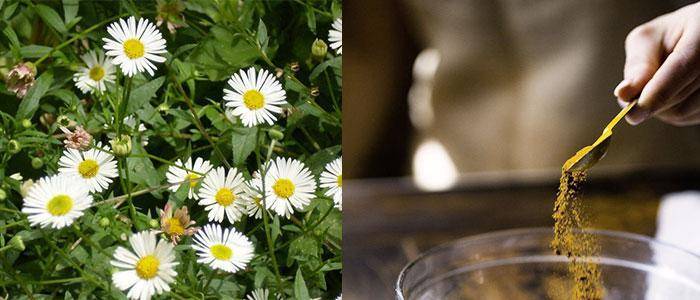
Apigenins or glucoside aglycones have a yellow color, generally presented in the form of small semi-translucent crystals.
Although its role is essential as a plant derivative to control renal damage and inhibit the functioning of CYP2C9 enzymes, its antioxidant effects are also proven. Highly valued properties as they prevent the deterioration of the body caused by oxidation and by solar radiation (UVA and UVB).
Apigenin, like other flavones and flavonoids, has a potent antioxidant effect similar to that of chrysin, which is another very interesting flavone for its use in controlling testosterone.
But in the case of apigenin, instead of possessing that medicinal action, it functions as an anti-aging agent, which is why it is included in supplements and even as an ingredient in anti-aging creams.
Another function is as a dye or colorant. It can be applied to textiles, wool, and fibers to manufacture clothing since its color changes in a solution.
Properties to Prevent Cancer
Eating a diet rich in flavones is one of the best methods to reduce the risk of cancer. According to recent epidemiological studies, foods rich in flavones of the apigenin class have anticancer properties, providing their full potential in the prevention of breast, stomach, prostate cancer, and with positive results in leukemia cultures.
The antioxidant properties of apigenin block organism oxidation. They prevent the deterioration of cellular DNA and the duplication of chains, which, when synthesized incorrectly, can lead to tumor growth.
The antioxidant action is very potent, beneficial for protecting the cardiovascular system, extending the life of the heart, and stopping neurological deterioration.
Tests conducted with this phytochemical indicate that its activity is chemopreventive and anti-inflammatory, much more potent than other flavones. Its medicinal properties can be used in countless therapies as they block damage caused by sun exposure, playing an important role in preventing skin cancer.
Apigenin induces cellular apoptosis (programmed cell death), inhibiting the release of prostaglandin, arachidonic acid, and nitrite.
Cosmetic Properties
With antioxidant effects, it acts as a potent inhibitor of lipoxygenase, reducing lipid peroxidation.
It also acts on the vascular system, improving blood flow and promoting the elimination of dark circles. Many cosmetic brands like Bioderma and Neostrata include a percentage of apigenin in their anti-dark circle creams.
The results of using creams with apigenin are greater elasticity of blood capillaries, increased microcirculation, and thickening of the walls of small veins. In general, a reduction in blood stasis can be observed, reducing the stagnation of blood that causes dark circles. With a little time, the purple grooves in the infraorbital area disappear.
Apigenin-7-glucoside
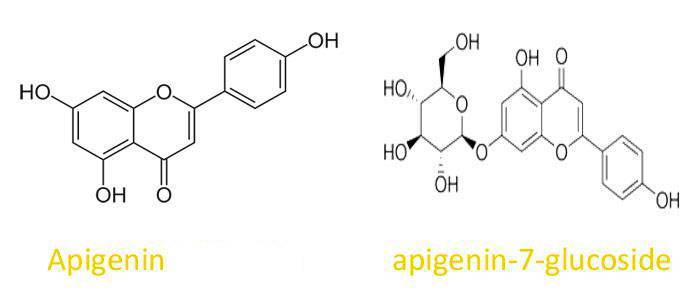
Apigenin glucosides have medicinal potential. Apigenin-7-glucoside is a derived component with antifungal activity. Used to treat Candida spp. infection.
Studies conducted to date indicate that the properties against fungi and germs that damage the body are often higher in apigenin-7-glucoside than in the original flavone apigenin. Its bioactive potential is greater when this glucoside is isolated from flavones.
In the quest for solutions to combat fungal infections, drugs made with flavone derivatives may improve and reduce the resistance of Candida albicans. In the coming years, their effectiveness may increase thanks to the inclusion of apigenin glucosides.
It has greater solubility and, like apigenin, anti-inflammatory, antiviral, and antibacterial properties, characteristics that make it considered a superflavonoid.
Foods Containing Apigenin
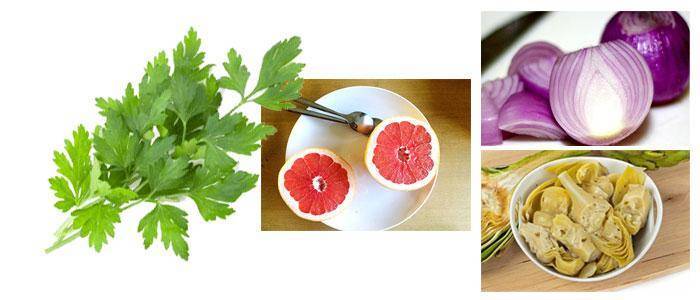
- Basil.
- Artichoke.
- Celery.
- Chamomile.
- Onion.
- Beer.
- Dandelion.
- Parsley.
- Grapefruit.
- Tea.
- Red wine.
There are many fruits, vegetables, and herbs that contain this natural compound. It is relatively easy nowadays to learn where apigenin is found.
Plant foods are some of the best sources of apigenin, with berries, cherries, grapefruit, and vegetables such as celery, parsley, or onion being prominent.
As for infusions, we can enjoy the content found in tea, as well as make chamomile (Chamaemelum nobile) infusions. Chamomile is one of the foods with the highest amount of apigenin.
Glucosides
In nature, we can find different apigenin glucosides formed naturally with the union of sugars. These are:
- Apigenin 7-O-apioglucoside (Apiin).
- Apigenin 7-glucoside (Apigetrin).
- Apigenin 6-C-glucoside (Isovitexin).
- Apigenin 7-O- neohesperidoside (Rhoifolin).
- Apigenin 6-C-glucoside 8-C-arabinoside (Schaftoside).
- Apigenin 8-C-glucoside (Vitexin).
References
- RR Ruela-de-Sousa, GM Fuhler, N Blom, CV Ferreira, H Aoyama, MP Peppelenbosch (2010). «Cytotoxicity of apigenin on leukemia cell lines: implications for prevention and therapy». Cell Death and Disease.
- Kanazawa et al., 2006.
- Enhancement of UVB-Induced Apoptosis by Apigenin in Human Keratinocytes and Organotypic Keratinocyte Cultures. Abu-Yousif AO et al. Cancer Res, 68(8):3057-3065. 2008.
- Si Dayong, Wang Y, Zhou Y-H, Guo Y, Wang J, Zhou H, Li Z-S, Fawcett JP (March 2009). «Mechanism of CYP2C9 inhibition by flavones and flavonols». Drug Metabolism and Disposition.
- Apigenin Prevents UVB-Induced Cyclooxygenase 2 Expression: Coupled mRNA Stabilization and Translational Inhibition. Tong X et al. Mol Cell Biol. 27(1):283-96. 2007.
- Srikumar Chakravarthi, Chong Fu Wen, HS Nagaraja (2009). «Apoptosis and expression of bcl-2 in cyclosporin induced renal damage and its reversal by beneficial effects of 4,5,7 – Trihydroxyflavone». Journal of Analytical Bio Science.
- Chong FW, Srikumar Chakravarthi, HS Nagaraja, PM Thanikachalam, Nagarajah Lee (2009). «Expression of Transforming Growth factor-β and determination of Apoptotic Index in histopathological sections for assessment of the effects of Apigenin (4′,5′,7′- trihydroxyflavone) on Cyclosporine A induced renal damage». Malaysian Journal of Pathology.
- Inhibition of TPA-induced cyclooxygenase-2 (COX-2) expression by apigenin throught downreglation of Akt signal transduction in human keratinocytes. Van Dross RT et al. Molecular carcinogenesis 44:83-91. 2005.
- The compound in the Mediterranean diet that makes cancer cells ‘mortal’ Emily Caldwell, Medical Express, May 20, 2013.
- Inhibition of mammalian collagenase, MMP-1, by naturally occuring flavonoids. Lim H. and Kim H.P. Planta Med. 73(12):1267-1274. 2007.
- Induction of human UDP-glucuronosyltransferase UGT1A1 by flavonoids-structural requirements. Walle UK, Walle T. Drug Metab Dispos. 30(5):564-9. 2002.
- Meyer, Hellen; Bolarinwa, Adrian; Wolfram, Guenther; Linseisen, Jakob (2006). «Bioavailability of Apigenin from Apiin-Rich Parsley in Humans». Annals of Nutrition and Metabolism.
- Interactions between sulforaphane and apigenin in the induction of UGT1A1 and GSTA1 in CaCo-2 cells. Vanda Svehlikova et al. Carcinogenesis. 25(9):1629-37. 2004.
- Effect of flavonoids and cynarine from cynara cardunculus L. on lipoxygenase activity. Bezakova L. Acta facultatis pharmaceuticae universitatis comenianae Tomus LIV 2007.
- Suppression of inducible cyclooxygenase and inducible nitric oxide synthase by apigenin and related flavonoids in mouse macrophages. Liang YC et al. Carcinogenesis. 20(10):1945-52. 1999.


