Delfinidin is a plant compound used as a pigment by plants and, when consumed by humans, it possesses antioxidant properties.
It is used as a nutraceutical, as a dye, and as a pH indicator, being able to be used for its effects in delaying aging, as a cardiovascular protector, as a regulator of insulin resistance, and for other purposes described in this text.
Contents
What is Delfinidin
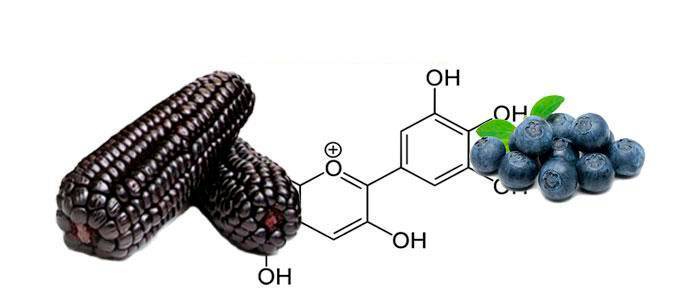
In plants, it is used as a pigment that gives blue color to flowers and purple and violet tones to leaves.
In humans, bioactive delfinidins have properties and benefits as antioxidants, protecting against free radicals, molecules that oxidize nutrients and cause skin aging.
It belongs to the group of anthocyanidins and, like all of them, delfinidin is sensitive to changes in acidity of the substrate or aqueous solution in which it is found.
Properties
All anthocyanins have antioxidant effects and, in the case of delfinidin, they can also be found in foods and fruits where it is present. Often, its presence is alongside other anthocyanins such as cyanidin and peonidin (natural dye E163e).
The properties of delfinidin are medicinal, having a high therapeutic value in preventing oxidation and as a product to prevent the growth of cancer cells. It possesses pharmaceutical value.
Anthocyanins of the delfinidin class have been shown to have properties to prevent heart diseases and delay aging of the body. They also have benefits for lowering blood sugar levels.
In this case, it is also an ally against obesity and weight gain, slowing down the gain of body fat.
All of this makes delfinidin an effective plant chemical compound in type 2 diabetic individuals, those with cardiovascular diseases, coronary heart diseases, dyslipidemia, or elevated blood fat concentration (LDL cholesterol, HDL, and triglycerides), as well as in cases of obesity. It increases insulin resistance.
Below, we list the properties of delfinidin:
- Lowers blood sugar levels.
- Has antioxidant effects.
- Prevents heart diseases.
- Participates in improving the body’s defenses.
- Assists in cases of obesity and weight loss diets.
- Inhibits adiposity and cholesterol coupling in arteries.
- Functions as an anti-aging treatment for the skin.
Foods and Plants with Delfinidin
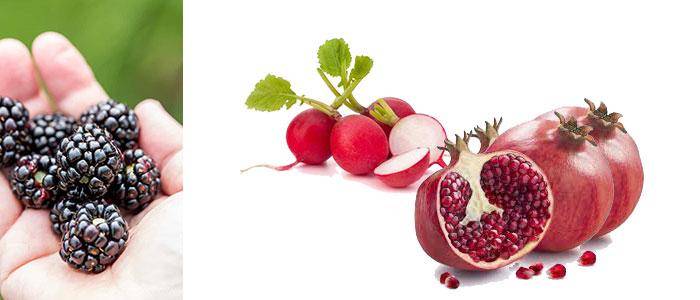
- Blueberries.
- Berries.
- Pomegranates.
- Raspberries.
- Wild berries.
- Red cabbage.
- Maqui (Aristotelia chilensis).
- Purple corn.
- Blackberries.
- Radishes.
- Grapes (Cabernet Sauvignon).
- Wine.
- Violet (Viola plant).
The maqui is the fruit of the Aristotelia chilensis plant and is edible. It is used for its antioxidant properties, possessing many more protective benefits than wine antioxidants. It is the food with the highest concentration of delfinidin.
Dosage

- 200 mg per day.
To obtain the dose of delfinidin, two methods can be used. The simplest is to buy delfinidin capsules that provide these 200 mg daily. Generally, taking 1 or 2 tablets is sufficient.
The other way to meet the body’s needs is through foods rich in delfinidin. Unfortunately, although there are many fruits that contain this plant compound, considered a phytochemical, in practice it is very difficult to achieve the same results as with supplements.
To give us an idea of the differences between taking delfinidin in capsule form or eating fruit, to obtain 20 mg daily through food, we would need to consume about 40 kilograms of maqui to equal the recommended daily amount.
If the needs for anti-aging prevention are high, the ideal is to obtain a good nutraceutical since, in this way, besides providing the necessary amount of anthocyanins, the dose can also be perfectly controlled. Through food, the values of delfinidin are variable, ranging between different varieties of fruits and medicinal plants, as well as within the same species depending on their cultivation method and environmental conditions.
Uses
- As an antioxidant.
- To protect the skin from solar radiation.
- As a pH indicator since it is sensitive to changes in the environment.
- Natural dye.
Antioxidant
By protecting against free radicals and oxidative damage in the body, it is a compound with great medicinal value. Delfinidin as an antioxidant protects against skin aging and prolongs the life of nutrients ingested through food.
It also has the ability to slow down the deterioration of cellular DNA and, in this way, prevent tumor growth as a result of damage to the cell nucleus.
Natural pH Indicator
In acidic solutions, the color of delfinidin is red, while it turns blue in an alkaline medium. It is quite common to use it to detect and regulate the pH of solutions being prepared.
Natural Dye E163B
In addition to being used as an antioxidant against aging and cardiovascular protector, delfinidin is obtained to manufacture the dye E163B.
Its function in this case is to serve as a product to change the color of certain processed foods such as candies, soft drinks, dairy products, and types of foods that, once prepared, have an unappetizing appearance.
By adding a small amount of delfinidin in powder form or as E163B, it is possible to modify the appearance of the food and make it much more appealing to the eyes. You can buy it as E163-B or with the INS163b code (E-number 163b).
Other Names for Delfinidin
- Delfinium.
- Delphinium.
- Delfinidinine.
References
- AFAQ Farrukh; SYED Deeba N.; MALIK Arshi; HADI Naghma; SARFARAZ Sami; KWEON Mee-Hyang; KHAN Naghma; MOHAMMAD ABU ZAID; MUKHTAR Hasan (2007). “Delphinidin, an anthocyanidin in pigmented fruits and vegetables, protects human HaCaT keratinocytes and mouse skin against UVB-mediated oxidative stress and apoptosis”. Journal of investigative dermatology 127 (1): 222-232.
- Ribereau-Gayon, Jean; Ribereau-Gayon, Pascal (1958). “The anthocyans and leucoanthocyans of grapes and wines”. American Journal of Enology 9: 1-9.


