Luteolin is a flavone in the subgroup of flavonoids. It is one of the most common antioxidants in food and its use is widespread.
Contents
Consuming it is a great advantage as it helps in many functions of the body, incorporating along with luteolin-7-glucoside and other flavonoids that mutually enhance their effects.
What is Luteolin used for
Its main function in humans is to block oxidation caused by free radicals. These are harmful agents that destroy molecules within the body and cause tissue damage. Luteolin serves to inhibit the damage from free radicals.
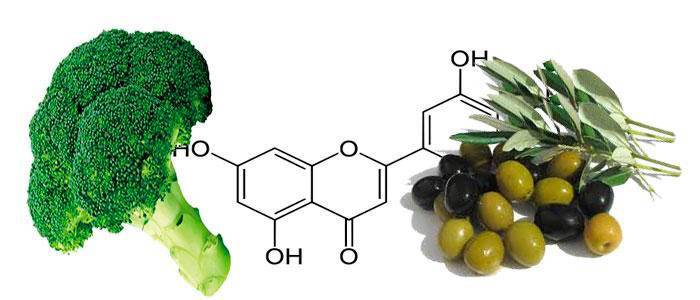
Another function is to prevent inflammation. There are many causes why an organ or part of the tissues that form it can become ill and swell. By including a daily dose of luteolin, many of the disorders that inflammation causes are prevented.
Properties and benefits
Its antioxidant effects protect against free radicals and the damage that exposure can cause. The properties of luteolin are:
- Antioxidant.
- Anti-aging.
- Free radical protective.
- Anti-inflammatory.
- Immune system modulators.
By capturing free radicals, it slows down skin aging and blocks the appearance of sunspots. The antioxidant property of luteolin keeps the cellular system young, preventing premature deterioration of skin tissue.
By acting as an antioxidant, it can also function as an anticancer agent, that is, help in cancer prevention.
Anti-inflammatory
Anti-inflammatory properties improve the health status in many people, reducing discomfort and promoting better tissue health in joints and those affected by inflammatory diseases. Luteolin is known to act as a phytochemical that prevents inflammation and, if it appears, helps in its reduction.
Many people can benefit from this property of luteolin. Typical cases include patients with arthritis, Crohn’s disease, gingivitis or inflamed gums, esophagitis, etc.
The benefits of luteolin for preventing inflammation are good for all cases as long as there are no contraindications, being an extra help to medical treatment.
Carbohydrate Metabolism
It also has the ability to increase carbohydrate metabolism. This property is beneficial for better assimilation of nutrients ingested through food. Including the flavone luteolin in the diet not only protects the heart but also enhances food assimilation.
Immune System
Likewise, within the action of luteolin and its properties, we can find that it modulates the immune system response, participating in the increase of the body’s defenses.
Something totally positive so that the body can manage allergies and contact with pathogens and allergens without producing an exaggerated response from T lymphocytes.
Luteolin glucosides help in many situations, playing a functional role in the prevention and blocking of premature aging.
Autism
There is a recent study in which palmitoylethanolamide and luteolin were used as complementary therapy to treat autism symptoms in children.
Palmitoylethanolamide (PEA) together with flavones of the luteolin class eliminated some symptoms of autism. The study was conducted at the University of Messina, Italy, with a 10-year-old child.
In addition to these results, those obtained with laboratory mice can also be consulted, where the administration of luteolin doses resulted in partial remission of autism, increasing social interaction and reducing self-absorption.
Research in this line related to autism spectrum disorder (ASD) is still ongoing.
Glucosides
- Luteolin-7-glucoside.
- Luteolin-7-glucuronide.
- Luteolin-7-O-glucoside.
- Luteolin-7-O-rutinoside.
- Luteolin-4-O-glucoside.
- Luteolin-7-O-β-D-glucoside.
- Luteolin-3′,7-di-O-glucoside
- Luteolin-6-neohesperidoside.
- Luteolin-6-C-glucoside.
- Apigetrin.
- Cynaroside.
Luteolin-7-glucoside

Present in anise, bell pepper, and chili luteolin-7-glucoside is one of the most potent luteolin glucosides. Also found in the composition of dandelion, coffee, and artichoke.
Luteolin 7 is a plant chemical compound similar to other flavonoids. It is a 7-O-glucoside-luteolin in which the chemical composition substitutes the beta-D-glucoside position 7 with a glycosidic linkage.
Its effects are antioxidant, acting as a trihydroxyflavone, glycosyloxiflavone, and a derived monosaccharide. As an example, we find cynaroside, which is a luteolin-7-O-glucoside.
Foods with Luteolin
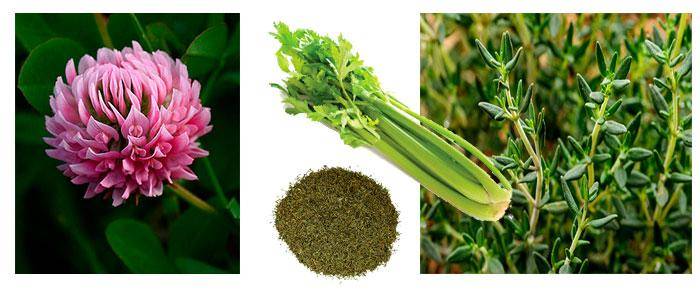
- Black and green olives.
- Olive oil.
- Artichoke.
- Anise.
- Celery.
- Broccoli.
- Horsetail.
- Coffee.
- Campanula persicifolia.
- Campanula rotundifolia.
- Cynara scolymus.
- Dandelion.
- Clover flower.
- Pitera (Furcraea foetida).
- Chamomile.
- Mint.
- Green and red bell pepper.
- Perilla.
- Ragweed pollen.
- Salvia tomentosa.
- Tea.
- Thyme.
- Carrot.
It is a flavone very common in vegetables like greens, fruits, and vegetables. Foods with the highest amount of luteolin should be included in the diet, alternating them all to compensate for the intake of other nutrients.
It can also be found in medicinal plants such as Campanula persicifolia, Campanula rotundifolia, Cynara scolymus, Furcraea foetida, etc.
Most of the indicated foods also contain other flavonoids that reinforce the antioxidant and anti-inflammatory effects of luteolin.
To identify foods rich in luteolin, you can look at their color. Most of them are of an intense green.
Why is it important to take it?
The human body is not capable of producing flavonoids. This is why it becomes essential to take luteolin.
This can be done by including fruits and vegetables from the «list of foods with luteolin» or by taking capsules or tablets.
As a first step, it is best to increase the consumption of fruits and, additionally, add foods such as artichokes, carrots, peppers, and consume chamomile and dandelion infusions. If the body’s antioxidant requirements are not met, it may be convenient to buy luteolin in tablets.
However, the intake of dietary supplements should always be controlled to avoid possible side effects.
How does it relate to flavones and flavonoids?
Its chemical structure is similar to flavonoids, with some differences as occurs with all types of flavones.
Luteolin is a flavone that increases the thickness of blood capillaries, improves their flexibility, and protects against vision loss. It shares with the isoflavone group the properties of functioning as a preventive agent against biological oxidation, macular degeneration, the appearance of cataracts, as well as exerting a strong influence against skin aging.
With Quercetin
The combination of these two flavonoids makes a powerful natural antioxidant. Luteolin is a flavone but can be taken with one of the best flavonols to delay aging and increase its protective effects against free radicals. Quercetin and luteolin are much more potent when mixed, and this is why in most cases, you will be able to acquire them together.
Other similar flavones
The group of flavones is composed of several pigments and phytochemicals. Most of them have antioxidant action and benefits that vary depending on the chosen one.
In this sense, in addition to helping against premature aging, there is a very special flavone since the properties of apigenin are also to increase the detoxification of the body.
They can complement each other or take a single flavone such as chrysin with Tribulus terrestris.


