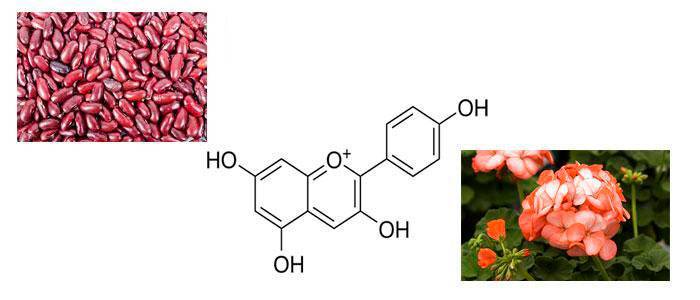
Petunidin is a natural chemical compound that acts as a pigment in plants and, when ingested by humans, offers antioxidant properties and benefits.
Contents
Petunidin
Considered as a secondary plant metabolite, petunidin is part of the list of anthocyanins and potent antioxidants, which have benefits for the cardiovascular system as well as protection against premature aging.
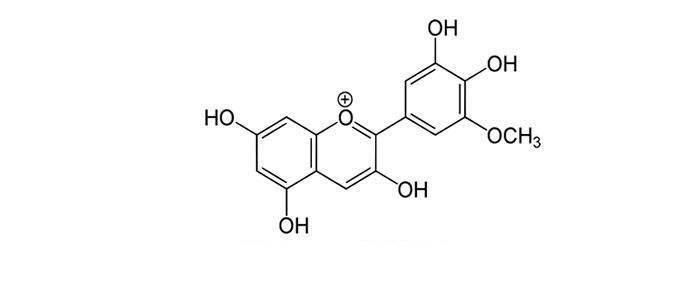
This type of pigment contains glucosides and particles that, while in plants serve the function of giving color to purple flowers, in humans provide medicinal properties. This has led to in-depth studies on its benefits for cancer prevention and heart-related pathologies.
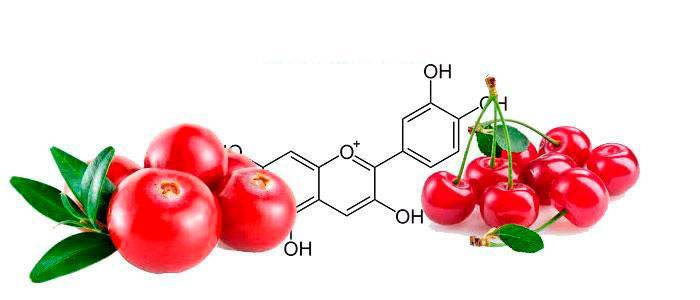
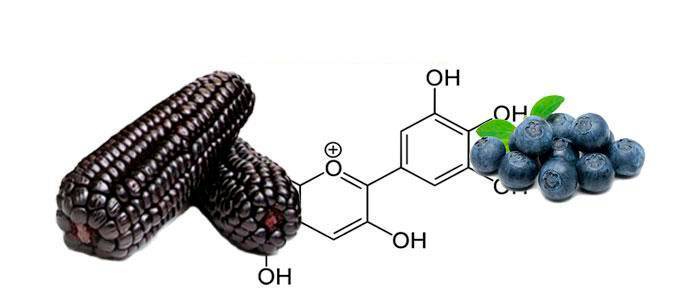
Unlike other anthocyanidins, petunidin is a pigment of dark red color, which is why foods containing it have intense red color and purple hues. It is common in fruits such as grapes, chokeberries, and juneberries.
Glucosides
- Petunidin-3-O-coum-rutinoside-5-O-glu.
- Petunidin 3-O-beta-D-glucoside.
- Penunidin 3-glucoside.
- Petunidin-3-O-(6-p-cumaril)
- Petunidin-3-O-(6-p-acetyl) glucoside.
Foods
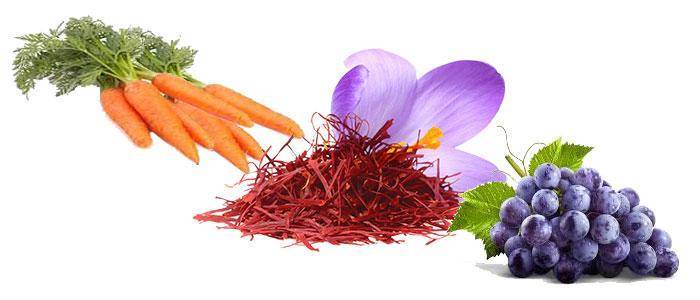
- Saffron.
- Grapes.
- Red wine.
- Carrots.
- Aronia sp.
- Juneberry (Amelanchier alnifolia).
Although it can be obtained from natural sources such as fruits that serve as antioxidants for the human body, the word «petunidin» derives from Petunia, a plant with a large amount of this polyphenol pigment.
Synthesis
Petunidin is an anthocyanidin synthesized from delphinidin, another pigment from the group of anthocyanins. Its formation is through the enzyme methyltransferase, a type of enzyme that transfers a methyl group.
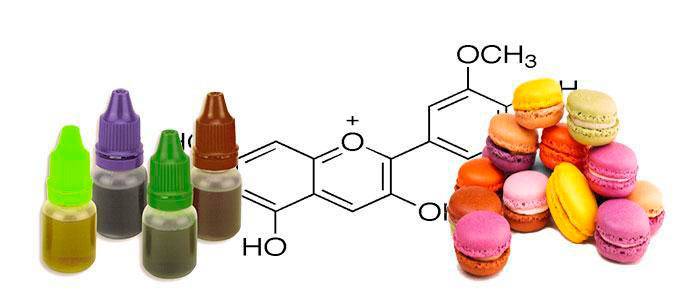
It is naturally present in plants, which is why red fruits are used to obtain the pigment and use it in the production of antioxidant supplements, as well as in the production of certain types of natural colorants (E163f) for food uses.
E163F Petunidin Colorant
Just as with other anthocyanins, the organoleptic properties of foods can be modified with the E163f colorant; likewise, the properties of products intended for human consumption can be improved with the petunidin compound E163-F colorant.
The natural colorant E163-F comes from petunidin, obtained from the skin of fruits.