Naringenin is a natural chemical compound produced by plants. It possesses properties and benefits for humans, being suitable for treating inflammation and slowing down aging caused by free radicals.
Contents
Properties and Benefits of Naringenin
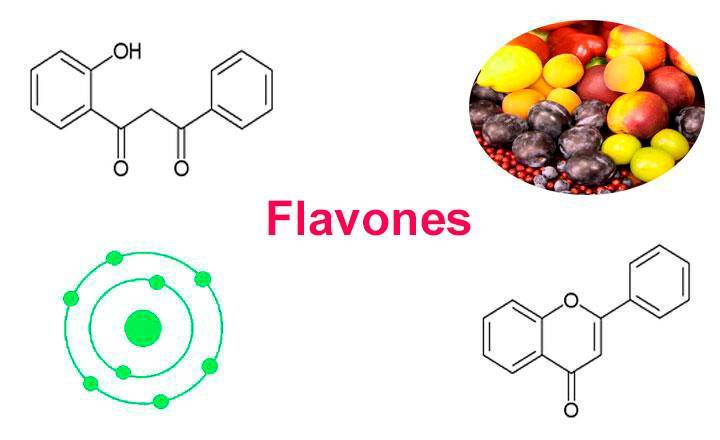
Known by its scientific name 5,7-dihydroxy-2(4-hydroxyphenyl)chroman-4-one, naringenin is a flavone, sometimes considered a flavanone, with anti-inflammatory properties.

It is a type of flavonoid with effects on human health, providing benefits to slow biological oxidation, free radicals, and inflammatory processes.
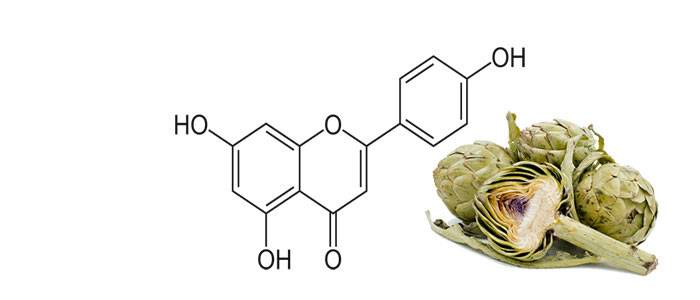
It also participates in carbohydrate metabolism, a role it shares with another flavone called luteolin.
Additionally, it is a plant phytochemical with properties to modulate the immune system.
Naringenin, like the rest of glycosylated flavonones and flavones, undergoes a chemical process called glycosylation, which adds carbohydrates to a protein. This results in glycoproteins that can be part of the cell surface, improving protein function and the rough endoplasmic reticulum (RER), as well as intervening in cell-cell interactions.
Cellular DNA Protection
One of the properties of naringenin is its ability to have protective effects on DNA. When its presence appears in the organism, it inhibits malfunction of cytochrome P450, preserving the quality of deoxyribonucleic acid.
Its benefits for eliminating viruses have also been studied. Indeed, naringenin has antiviral properties. In vitro studies have been conducted where it shows the power to reduce the duplication of the hepatitis C virus.
Obesity
It improves fat metabolism, reducing the obesity rate. When a person ingests too much food or has a diet not in line with their caloric expenditure, the presence of foods rich in naringenin decreases fat absorption.
Additionally, it also has the ability to reduce cholesterol, improving cardiovascular health and preventing arteries from becoming obstructed with adipose tissue.
Relation with Other Flavonoids and Chalcones
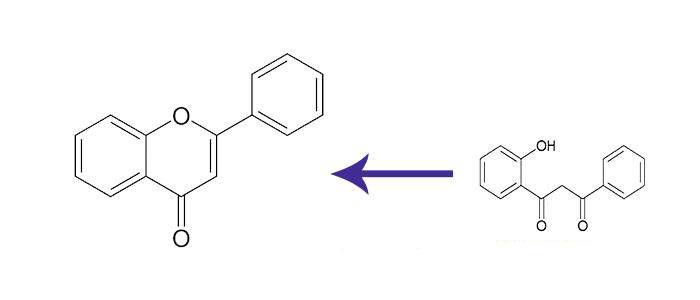
To be synthesized, the presence of another group of flavonoids, called chalcones, is necessary. The enzyme chalcone isomerase uses a chalcone to produce a flavanone.
Currently, there are some procedures that allow its synthesis, although, commonly, naringenins are extracted from plants. In these, their presence is natural, meaning they produce them by themselves.
Foods with Naringenin
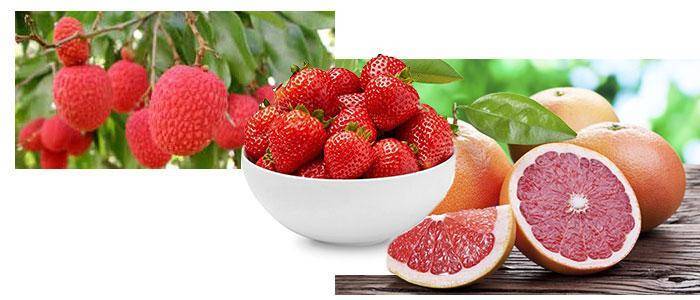
- Citron.
- Strawberries.
- Kiwis.
- Kumquat.
- Lychees.
- Lime.
- Lemons.
- Mandarins.
- Oranges.
- Grapefruits (toronja).
- Tomatoes.
- Thyme.
The foods with the highest amount of naringenin are citrus fruits. In grapefruit, it is the most common flavanone. In lemon and orange, there is also a good concentration of this flavone as well as other antioxidants.
Additionally, citrus fruits are fruits with a high content of vitamin C, which improves the functioning of the immune system, while stimulating digestive processes.
Absorption in Metabolism
One of the drawbacks of all flavonoids is their poor absorption in the intestine when ingested orally. In the case of taking naringenin, its absorption in the intestinal tract is close to 15%.
This makes it difficult to control treatment with flavonoids and other classes of flavones. There are variations among individuals based on their age, diet, as well as lifestyle.
The best results come when ingested with fruit, and additionally, naringenin pills are also taken. In both cases, there is stimulation to better metabolize the rest of the food ingested.
Obviously, like any healthy nutritional supplement, this should be recommended by a professional who will guide the person taking it.
When to Take It?
You can take naringenin from food at any time of the day. In the morning, it helps combat free radicals and slow down the deterioration from sun exposure.
During the night, it stimulates the formation of new collagen, which is an essential protein for having young and beautiful skin.
References
- Felgines C, Texier O, Morand C, Manach C, Scalbert A, Régerat F, Rémésy C (December 2000). «Bioavailability of the flavanone naringenin and its glycosides in rats». J. Physiol. Gastrointest. Liver Physiol. 279 (6): G1148-54. PMID 11093936.
- Mulvihill EE, Allister EM, Sutherland BG, Telford DE, Sawyez CG, Edwards JY, Markle JM, Hegele RA, Huff MW (October 2009). «Naringenin prevents dyslipidemia, apolipoprotein B overproduction, and hyperinsulinemia in LDL receptor-null mice with diet-induced insulin resistance». Diabetes 58 (10): 2198-210. PMC 2750228. PMID 19592617. doi:10.2337/db09-0634.
- Fuhr U, Klittich K, Staib AH (April 1993). «Inhibitory effect of grapefruit juice and its bitter principal, naringenin, on CYP1A2 dependent metabolism of caffeine in man». Br J Clin Pharmacol 35 (4): 431-6. PMC 1381556. PMID 8485024. doi:10.1016/0024-3205(96)00417-1.
- Lee SH, Park YB, Bae KH, Bok SH, Kwon YK, Lee ES, Choi MS (1999). «Cholesterol-lowering activity of naringenin via inhibition of 3-hydroxy-3-methylglutaryl coenzyme A reductase and acyl coenzyme A:cholesterol acyltransferase in rats». Nutr. Metab. 43 (3): 173-80. PMID 10545673. doi:10.1159/000012783.
- Choudhury R, Chowrimootoo G, Srai K, Debnam E, Rice-Evans CA (November 1999). «Interactions of the flavonoid naringenin in the gastrointestinal tract and the influence of glycosylation». Biophys. Res. Commun. 265 (2): 410-5. PMID 10558881. doi:10.1006/bbrc.1999.1695.
- Vallverdú-Queralt, A; Odriozola-Serrano, I; Oms-Oliu, G; Lamuela-Raventós, RM; Elez-Martínez, P; Martín-Belloso, O (2012). «Changes in the polyphenol profile of tomato juices processed by pulsed electric fields». J Agric Food Chem. 60 (38): 9667-9672. PMID 22957841. doi:10.1021/jf302791k.
- Nahmias Y, Goldwasser J, Casali M, van Poll D, Wakita T, Chung RT, Yarmush ML (May 2008). «Apolipoprotein B-dependent hepatitis C virus secretion is inhibited by the grapefruit flavonoid naringenin». Hepatology 47 (5): 1437-45. PMID 18393287. doi:10.1002/hep.22197.
Access all the content of this class of flavonoids and discover the list with all the properties of flavones at: