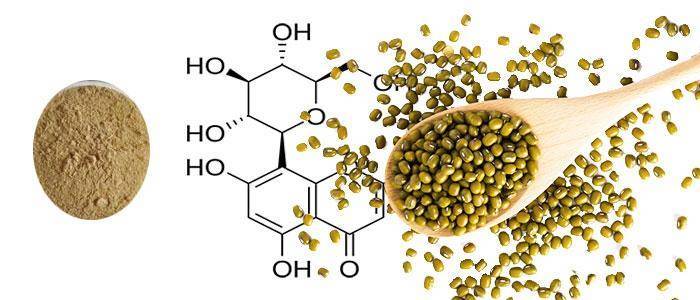
Baicalein (5,6,7-trihydroxyflavone) is a polyphenolic compound derived from plants and medicinal herbs. It has properties for human health and its chemical form is an aglycone.
Contents
What is Baicalein
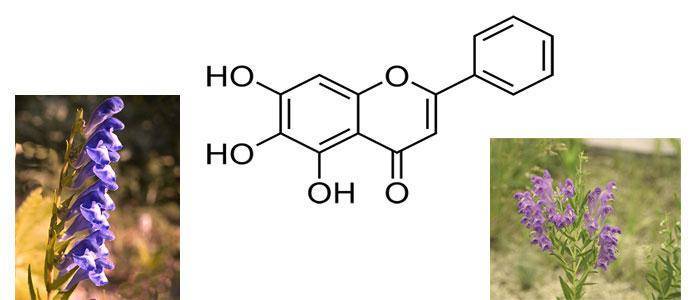
First isolated from the plant called Scutellaria baicalensis, hence its name. Ba baicalein or 5,6,7-trihydroxyflavone is a flavone that belongs to the group of flavonoids. It is also found in another plant of the same family, Scutellaria lateriflora.
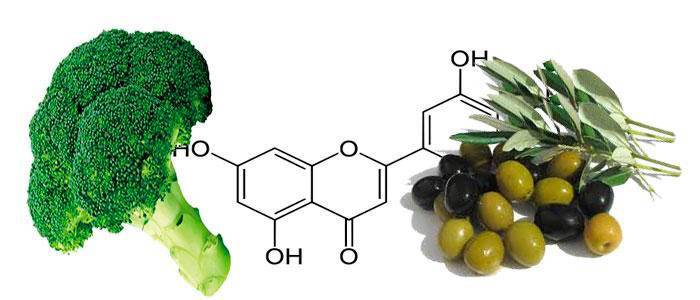
It is very common in foods such as fruits and all kinds of vegetables, and can also be obtained from many other medicinal plants.
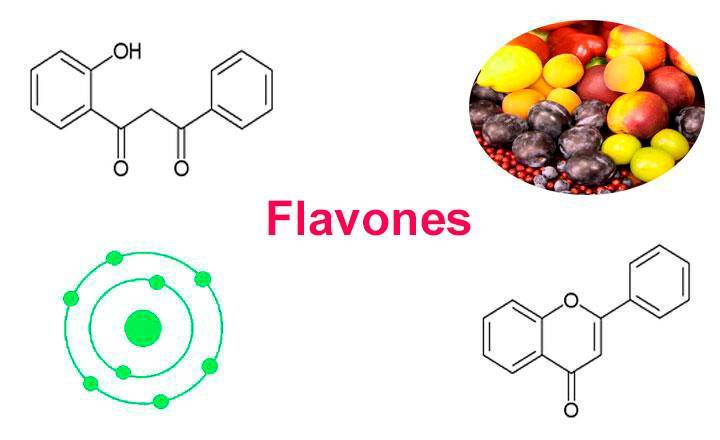
Baicalein or baicalein is a derivative of 2-phenylchromen-4-one (2-phenyl-1,4-benzopyrone), composed of a propanoic chain attached to the ring and a benzene ring attached to the same chain. The isomerase enzyme cyclizes the carbon chain, leading to its chemical structure in the form of a flavone.
Where is it found
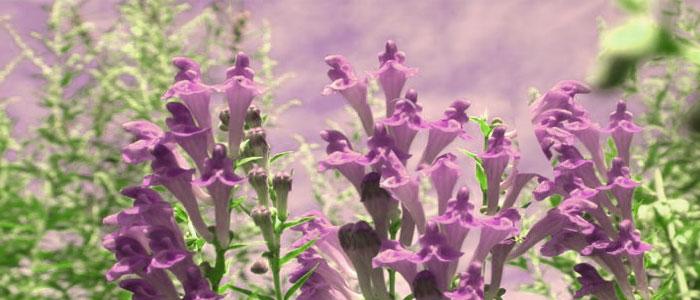
- Scutellaria baicalensis.
- Scutellaria lateriflora.
- Oroxylum indicum.
Properties
- Antiestrogenic.
- Anti-inflammatory.
- Memory stimulants.
- Antibacterial.
- Antiviral.
- Anxiolytic.
- Anticancer.
- Antioxidant.
- Antithrombotic.
- Antipyretic.
- Antiasthmatic.
- Antiallergic.
It has great medicinal activity and can be used in many cases.
Antioxidant properties are the most well-known since all flavones have this effect. However, besides protecting against hydroxyl radicals, they also have benefits for many other situations that we explain in detail below.
Antiestrogenic
Like many other flavonoids, baicalein functions as an antiestrogen. It blocks or inhibits the action of estrogens produced in the body, making it suitable for menopausal symptoms and other disorders related to human estrogen function.
Anti-inflammatory
One peculiarity is that it also possesses anti-inflammatory effects.
Baicalein acts in the bodies of animals, including humans, by inhibiting certain types of lipoxygenases. These enzymes can activate inflammation at certain times. By blocking the lipoxygenases that initiate tissue swelling, inflammation would either not occur or would be of a lesser degree. It reduces the rate of cytokine appearance.
Memory and Cognition
Some other flavonoids and flavones have a similar property. Baicalein acts as an inhibitor of some cytochrome P450 enzymes. Remember that naringenin (flavone) and genistein (isoflavone) also do this.
Specifically, it blocks the enzyme CYP2C9, which plays a key role in drug and drug metabolization in the human body.
The entire group of flavones, where baicalein is found, has benefits for memory. They can help recall in amnesic individuals and slow cognitive decline in the elderly. It is positive against neurodegeneration or brain aging.
It protects against neuron death, acting together with the prion protein, which regulates JNK activation.
Antibacterial
Another property that has been studied is its antibacterial and antiviral action.
With this plant metabolite present, the anaerobic bacteria Staphylococcus aureus cannot form biofilms, exposing it and reducing its virulence in the body. Staphylococci cause many infections and diseases, so the discovery of baicalein and its antibacterial properties is great news for medicine.
While it can be used to control different types of bacteria causing diseases in humans, baicalein also has antitumor activity. Specifically, it has been found to inhibit the replication of human immunodeficiency virus type 1 (HIV-1).
It prevents the virus-modified DNA from replicating in other cells of the body.
Anxiolytic
Its mechanism of action acts as a positive allosteric modulator of the benzodiazepine and non-benzodiazepine GABA receptor, functioning as a natural anxiolytic.
The properties of baicalein to eliminate anxiety and induce relaxation are being studied because, if confirmed, they could have very important therapeutic applications.
Examples of cases where it could be used include anxiety treatment, depression, post-traumatic stress disorder, muscle contractures as it also functions as a muscle relaxant, etc.
Anticancer and Antiproliferative
The antiproliferative effects of baicalein are well documented. This means that it reduces the availability for cells to duplicate, thus reducing the risk of cancer.
Some of its effects act on endothelins (ET-1), lowering the rate of smooth muscle cell duplication in the pulmonary artery. It interacts with TRC1 expression channels for this purpose. The inhibition occurs in this latter channel.
Tests have been conducted with various types of oncological diseases such as breast cancer, myeloma, osteosarcoma, colorectal cancer, hepatocellular carcinoma, bladder cancer, and cervical cancer. In these cases, it is evident that baicalein activates cellular apoptosis, reducing tumor formation.
Likewise, it has also been observed to limit the movement of cancer cells, which is beneficial for controlling metastasis. Its role could be very important as complementary therapy for these types of diseases.
For it to function effectively against cancer, it needs to be in an early stage (stage I or II).
Antioxidants
It blocks the action of free radicals, preventing oxygen from becoming free.
Its protective role is very important since these types of molecules can damage cells, causing aging. The antioxidant properties of baicalein are very beneficial for fibroblasts, keratinocytes, and endothelial cells of human skin.
The benefits of inhibiting the oxidation of LDL (low-density lipoproteins) cholesterol have also been tested.
Metabolism
Unfortunately, the properties of baicalein are limited by its bioavailability. Consumption of foods rich in baicalein yields poor results as most polyphenolic compounds are excreted without being assimilated. This is very similar to what happens with most flavonoids.
Baicalein is poorly soluble, and this poses a real problem for its assimilation.
To apply it medicinally, it is necessary to increase its solubility.
Due to the described drawbacks, specific formulas are being studied to increase its bioavailability without having to increase the doses taken.
Trade Names
- Baicalein.
- 5,6,7-trihydroxyflavone.
- Prolyl endopeptidase (PEP) which is a derivative.
References
- Xiomara Bonkanka Tabares, Cecilia. «Pharmacological evolution of terpenes and flavonoids of plant origin.» University of La Laguna Publications Services.
- Martínez-Flórez, J. González-Gallego, J. M. Culebras* and M.ª J. Tuñón. «Flavonoids: Properties and Antioxidant Actions.»
- Ricard A. Rodríguez Mias. «NMR in Drug Discovery from Screening to Structure-based Design of Antitumoral Agents.»
- Team, EBI Web. Baicalein (CHEBI:2979).
- Baicalein of chemicalbook.
- Kim, H., Yiluo, H., Park, S., Lee, J.Y., Cho, E., Jung, S. «Characterization and Enhanced Antioxidant Activity of the Cysteinyl β-Cyclodextrin-Baicalein Inclusion Complex».
- Moon, Ji-Hong, Park, Sang-Youel (February 1, 2015). «Baicalein prevents human prion protein-induced neuronal cell death by regulating JNK activation.»
- Li, Junbo, Ma, Juan, Wang, Ke Si, Mi, Chunliu, Wang, Zhe, Piao, Lian Xun, Xu, Guang Hua, Li, Xuezheng et al. (September 19, 2016). «Baicalein inhibits TNF-α-induced NF-κB activation and expression of NF-κB-regulated target gene products».
- Liu, H., Dong, Y., Gao, Y., Du, Z., Wang, Y., Cheng, P., Chen, A., Huang, H. «The Fascinating Effects of Baicalein on Cancer: A Review».
- Cathcart, M.C., Useckaite, Z., Drakeford, C., Semik, V., Lysaght, J., Gately, K., O’Byrne, K.J., Pidgeon, G.P. «Anti-cancer effects of baicalein in non-small cell lung cancer in-vitro and in-vivo.» BMC Cancer 2016.
- Luo, J., Kong, J.L., Dong, B.Y., Wang, K., Wu, L.H., Hou, C.C., Liang, Y., Li, B., Chen, Y.Q. «Baicalein attenuates the quorum sensing-controlled virulence factors of Pseudomonas aeruginosa and relieves the inflammatory response in P. aeruginosa-infected macrophages by downregulating the MAPK and NFκB signal-transduction pathways».
- Hu, JZ., Bai, L., Chen, D.G., Xu, J.T. «Computational investigation of the anti-HIV activity of Chinese medicinal formula Three-Huang Powder».
- Zhao, Q., Chen, Z.Y., Martin, C. «Scutellaria baicalensis, the golden herb from the garden of Chinese medicinal plants.» Sci Bull (Beijing).